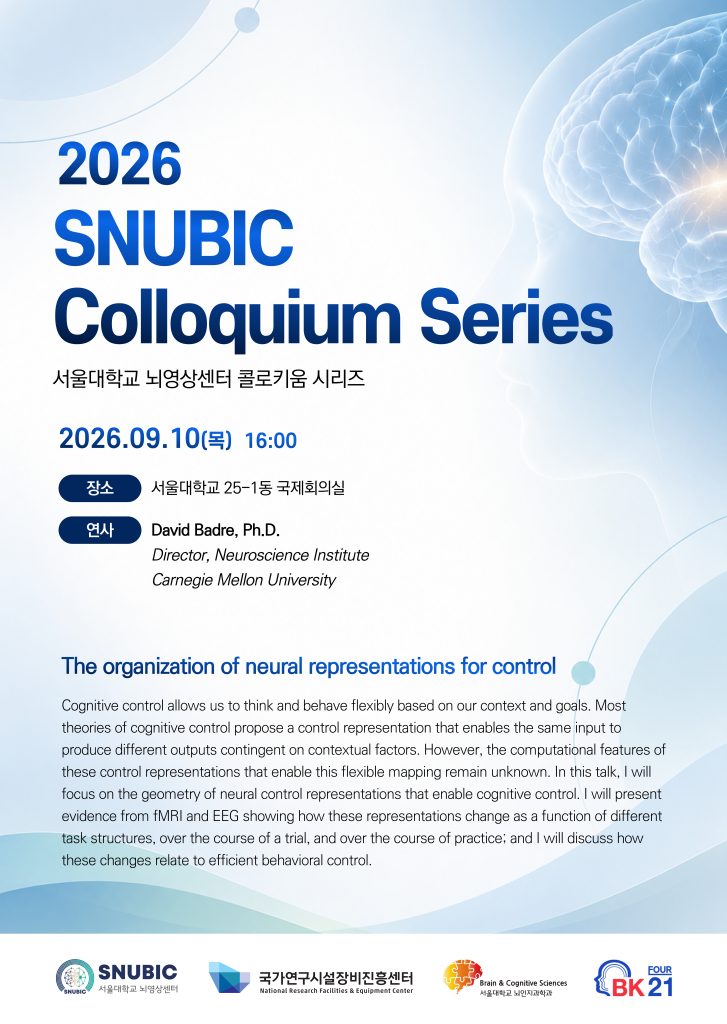
The organization of neural representations for control
Cognitive control allows us to think and behave flexibly based on our context and goals. Most theories of cognitive control propose a control representation that enables the same input to produce different outputs contingent on contextual factors. However, the computational features of these control representations that enable this flexible mapping remain unknown. In this talk, I will focus on the geometry of neural control representations that enable cognitive control. I will present evidence from fMRI and EEG showing how these representations change as a function of different task structures, over the course of a trial, and over the course of practice; and I will discuss how these changes relate to efficient behavioral control.